
Cromwell’s Brasserie — A Little Cranleigh Story
There’s something about walking past Cromwell’s that makes me slow down.
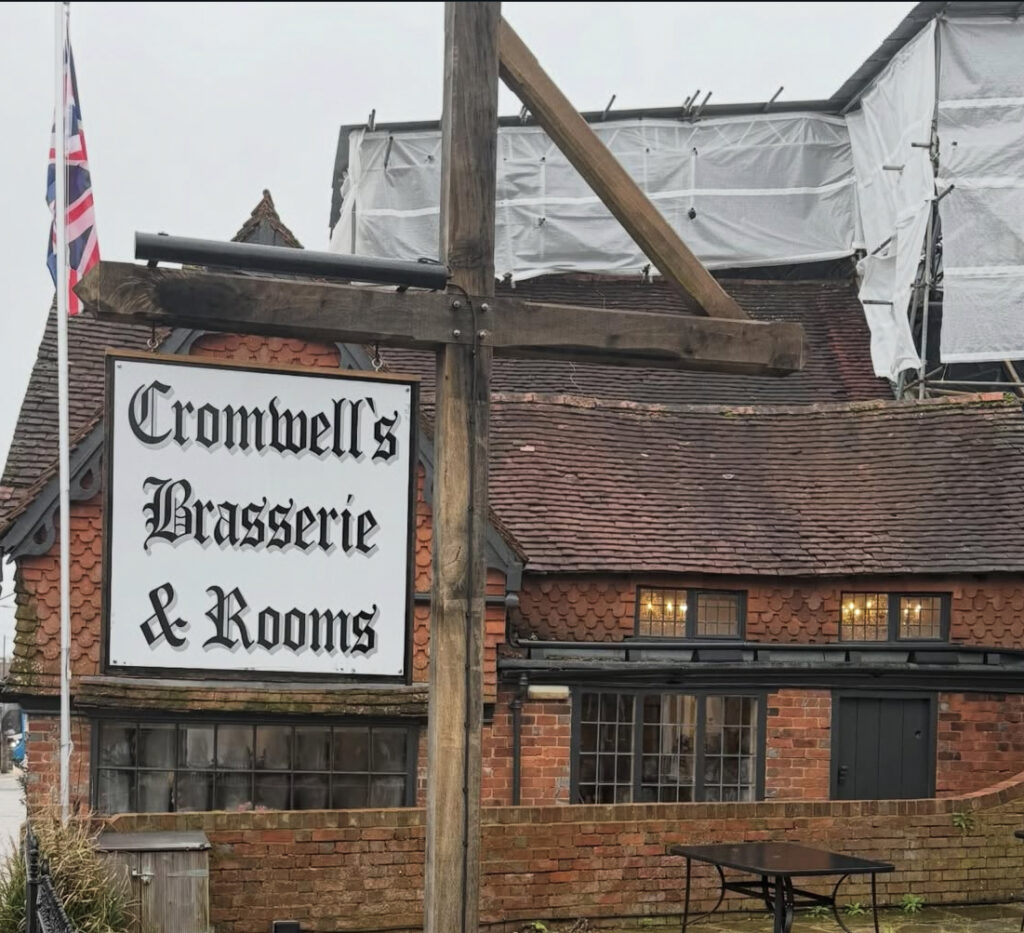
The old red brick.
The slightly uneven roof tiles.
That wooden hanging sign that feels as though it belongs to another century.
Cromwell’s Brasserie & Rooms sits quietly on the High Street, but the building itself tells a much older story. Cranleigh grew rapidly in the Victorian era, especially after the railway arrived in 1865. Before that, this was farmland, parish life, and long stretches of countryside stitched together by muddy lanes.
Many of the High Street buildings we see today were built during that expansion — solid, practical, proud. This one carries those Victorian hallmarks: decorative brickwork, timber detailing, clay tiles, deep-set windows. It feels rooted.
The name, of course, nods to Oliver Cromwell. Whether he ever stepped foot here is another matter. There’s no clear record of that — and I rather like the mystery. Cranleigh certainly existed in the 1600s, centred around St Nicolas Church, but it would have been a very different place. Smaller. Quieter. Slower.
What I love most is how these buildings evolve. They begin as something entirely practical — perhaps residential, perhaps retail — and over decades become woven into community life in new ways. Today, Cromwell’s is somewhere people gather. Sunday lunches. Visiting relatives. Warm light through the windows on grey afternoons.
It feels steady.
And in a world that can feel fast and unsettled, there’s something grounding about a building that has stood through generations — watching Cranleigh grow, change, modernise — yet still holding its place on the High Street.
Sometimes I think the walls of this village know more than we do.
And I like that.
Dogs allowed which is an added bonus.
Food – Bed and Breakfast – Bar
In the heart of Cranleigh village
where old brick leans gently into time,
there stands a house of stories
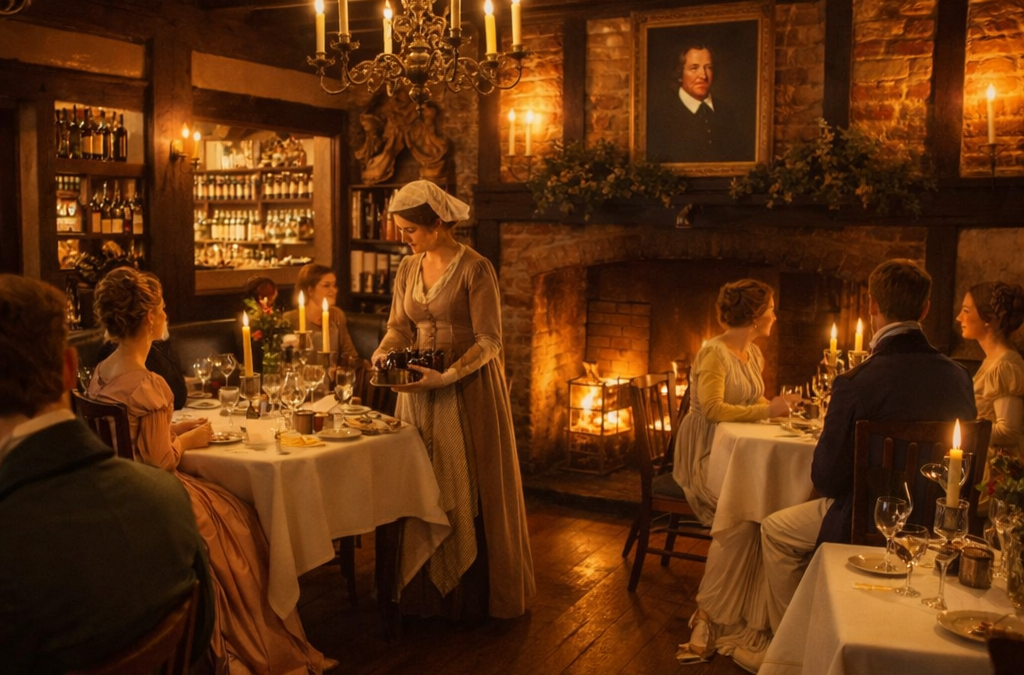
Cromwell’s, warm with candlelight.
Not hurried.
Not loud.
But steady as oak beams overhead.
Footsteps echo softly on worn floors,
whispers of centuries stitched
into plaster and pane.
One can almost imagine cloaks and quiet counsel,
though now it is linen napkins
and the hum of evening wine.
Outside, the High Street carries on —
boots on cobbles, rain on glass —
but inside,
there is silver cutlery catching light,
the scent of rosemary and butter,
the slow comfort of plates set down with care.
The rooms above
hold a different kind of hush.
Windows framing sleepy rooftops,
pillows fluffed for travellers
who came for supper
and stayed for stillness.
There is something grounding here —
a reminder that buildings endure,
that walls witness laughter,
that centuries can soften into warmth.
Cromwell’s is not just a brasserie.
It is a pause.
A deep breath in brick form.
A place where history rests its elbows
and invites you to sit awhile
Recent Comments