Celebrations Bakery
As I stepped into the bakery today to collect my husband’s cake, the first thing that met me was the smell — warm bread, sweet sponge, that unmistakable comfort that only a proper bakery gives. And behind it all, laughter. Gentle, easy laughter drifting from behind the counter as they served.
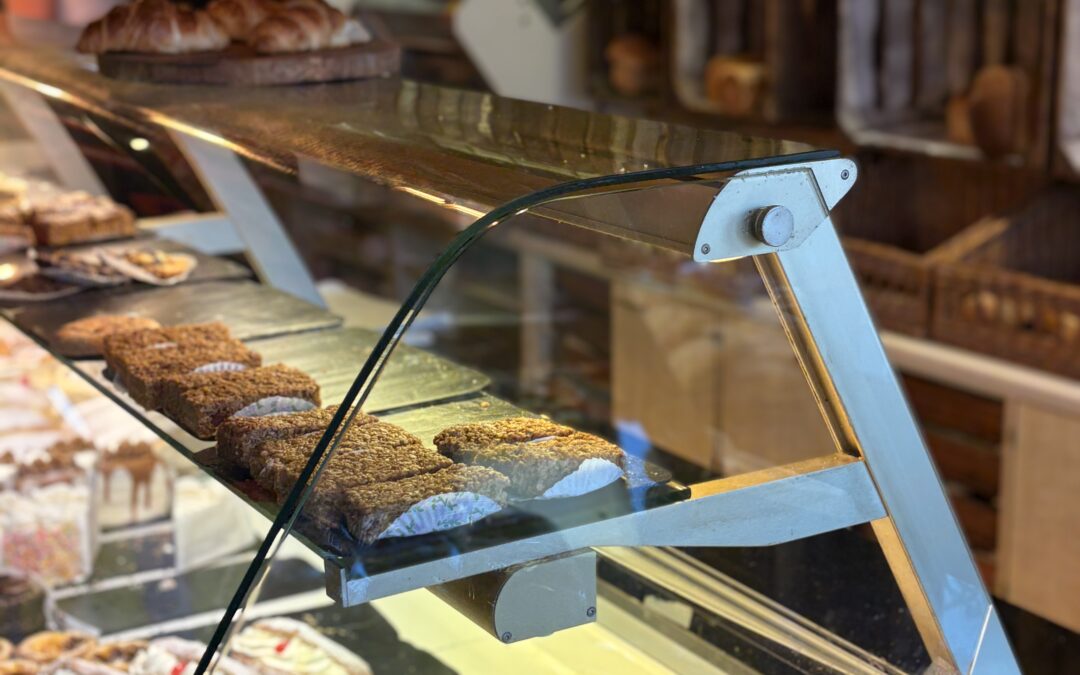
The shop was softly lit, calm beams stretching across polished counters, trays of pastries lined up like little works of art. I found myself wondering how many generations have stood in that very spot, hands dusted in flour, making pastries day in, day out. What time do they wake up? How early does the oven glow so that, by the time we wander in mid-morning, everything is ready — crusty loaves, iced cupcakes, celebration cakes boxed with care?
There was a slight smile on my face as I joined the queue. People chatting. Children peering up at the glass. A steady line of villagers waiting patiently, knowing that this small business is still thriving — even in the times we live in. That, in itself, feels like something to celebrate.
The sense of customer care is paramount. It’s not rushed. It’s not transactional. It’s service with a smile — and sometimes that’s all you need. A box tied neatly. A “Have a lovely day.” Eye contact. Warmth.
And then the glow of happy faces as people leave, sugary treats in hand, icing quite literally on the cake.
It’s never just about the cake, is it? It’s about being part of something local. Something steady. Something that rises every morning before we do — so we’re fed, celebrated, and reminded that simple things still matter.
THE HISTORY
If Celebrations is now in its fourth generation, that changes everything — because that’s no longer just a shop… that’s legacy.
The Family Line
A fourth-generation bakery means the trade has been passed down — parent to child — across roughly 80 to 100 years. That would place its origins somewhere in the early to mid-1900s, possibly even pre-war Britain.
Family bakeries of that era would have:
- Mixed dough by hand
- Used traditional deck ovens
- Supplied bread daily before supermarkets existed
- Delivered locally
- Known every customer by name
During wartime Britain, flour was rationed. Many family bakers had to adapt recipes, reduce sizes, or close temporarily. Those that survived became deeply woven into their communities — resilience became part of their identity.
If Celebrations has truly remained within one family across four generations, that means:
- Skills were taught at the bench, not from books
- Recipes were guarded and refined over decades
- Early mornings were normal for children growing up around flour sacks and proving dough
- The shop became more than business — it became inheritance
The Building & Continuity
Whether the family has always been in this exact unit or moved premises over time, the presence of a fourth generation signals something powerful:
Consistency in a High Street that has seen:
- The arrival and closure of the railway
- Two World Wars
- The rise of supermarkets
- Economic recessions
- The shift to online shopping
And yet — bread still rises before dawn.
What That Means
A fourth-generation bakery isn’t just about cakes.
It represents:
- Craft over convenience
- Memory over trend
- Community over corporation
In a village like Cranleigh, that matters.
What a wonderful place to say lovely words about the history of the bakery,so well written and it makes me smile through the words