
Description
The Skull Whistle: A Symbol of History, Mystery and Mortality
There are some objects that immediately spark curiosity.
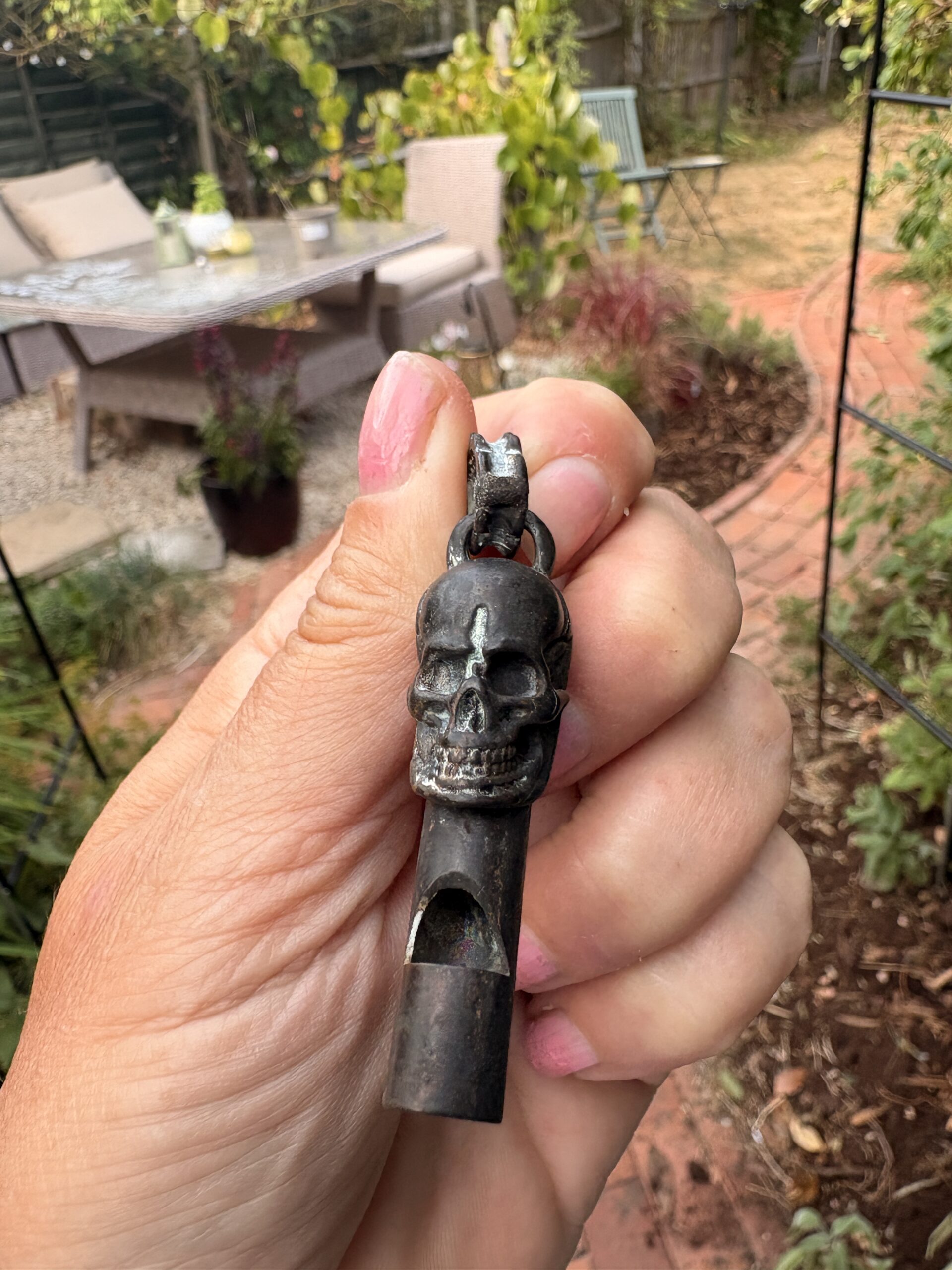
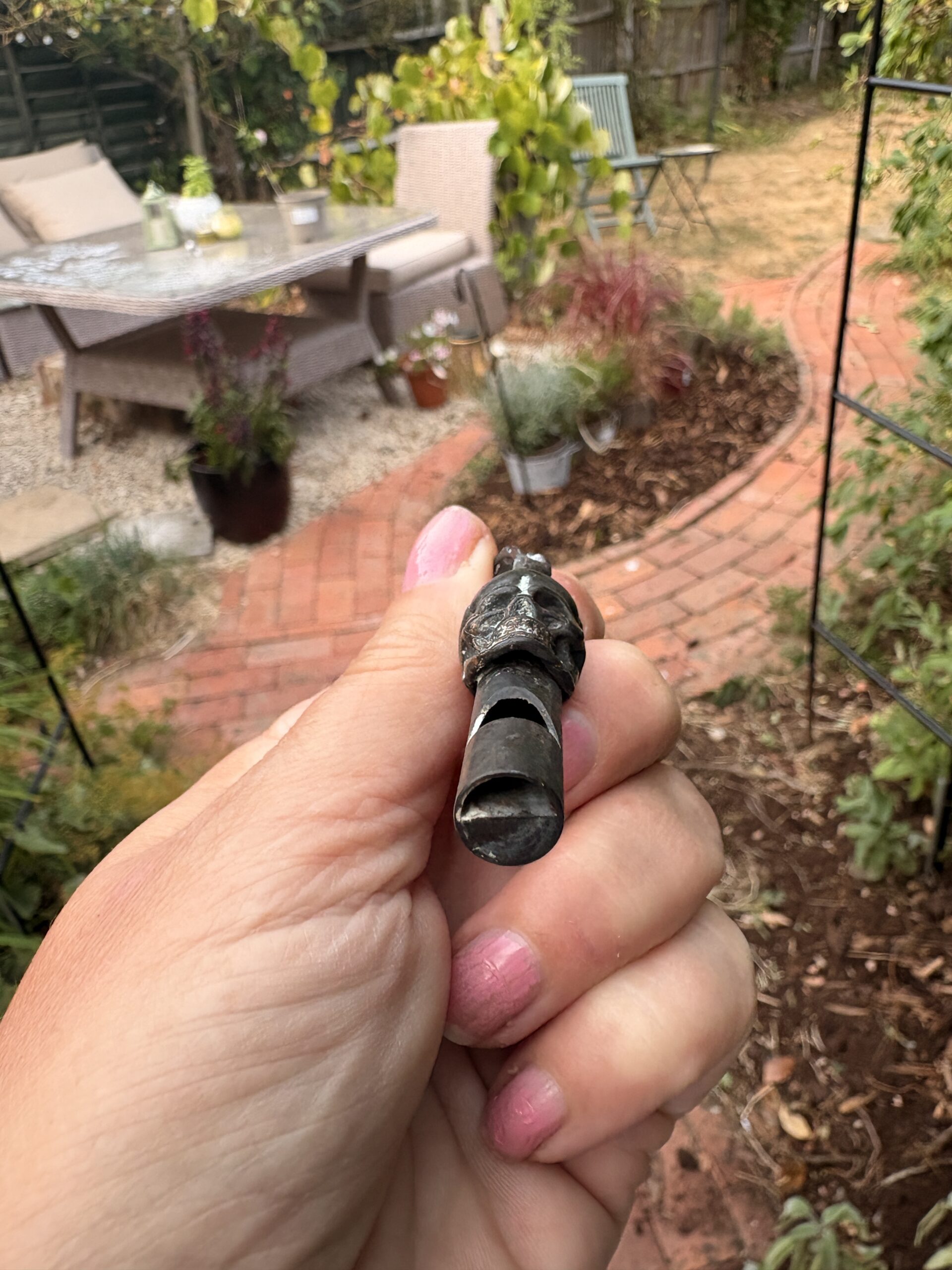
When this skull whistle arrived, I couldn’t help but wonder whether it had a real military history or whether it was inspired by something much older. It turns out the story is perhaps even more interesting.
The History of the Whistle
Whistles have been used for thousands of years, but by the nineteenth century they had become essential tools for communication. Police officers, railway guards, factory workers and the military all relied on whistles when voices simply weren’t loud enough.
During the First World War, whistles became synonymous with trench warfare. Officers carried metal whistles to signal soldiers to leave the trenches, advance across No Man’s Land or retreat. Amidst the deafening roar of artillery and gunfire, a whistle could carry much further than the human voice.
Most genuine trench whistles were simple brass or steel instruments. They were designed for one purpose alone: to be heard.
Why a Skull?
Unlike traditional military whistles, this one carries a detailed skull.
The skull has been a powerful symbol for centuries. In medieval Europe it appeared in religious art, reminding people that life is temporary. By the Victorian era, skulls had become part of the memento mori tradition, a Latin phrase meaning “remember that you must die.”
Rather than being frightening, these objects encouraged people to appreciate life, cherish those they loved and make the most of every day.
It is a surprisingly uplifting message hidden behind an unsettling image.
Is It a Real Trench Whistle?
This style of skull whistle is a modern creation inspired by history rather than an original military issue.
There is no evidence that soldiers in the First World War carried skull-decorated whistles. Instead, it combines the familiar shape of historical signal whistles with Gothic artwork and symbolism, creating something that feels both historical and imaginative.
Sometimes an object doesn’t need to be antique to tell an interesting story.
Why It Belongs in The Tea Rose Cabinet of Curiosities
The Tea Rose has never been about collecting expensive antiques.
It is about finding objects that encourage us to ask questions, learn something new and appreciate the craftsmanship and symbolism behind everyday items.
This little whistle brings together military history, Victorian symbolism and modern Gothic design in one fascinating piece.
Whether displayed beside vintage medical instruments, old apothecary bottles or well-thumbed history books, it reminds us that every object has a story. Sometimes that story is about where it came from. Sometimes it is about the ideas that inspired it.
Either way, it deserves a place in a cabinet of curiosities.
Have you ever found an object that made you stop and wonder about its history? I’d love to hear your story.

Reviews
There are no reviews yet.