
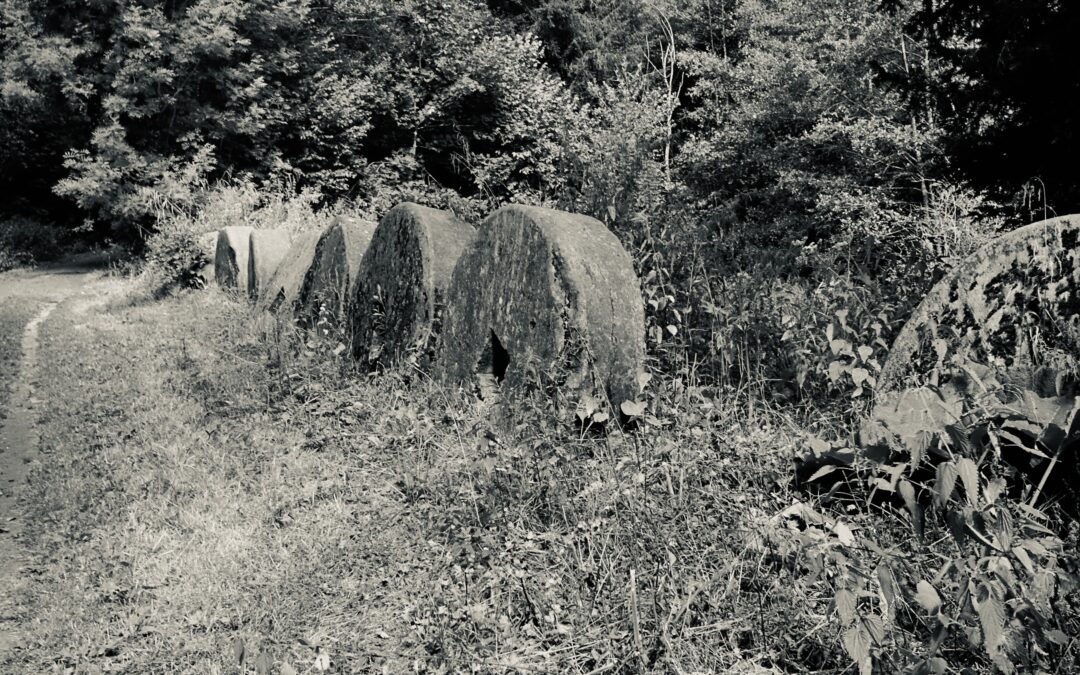
Chilworth Gunpowder Mills
When Grace Met Harry
We were supposed to be visiting St Peter’s Church in Albury.
That was the plan.
Then, out of the corner of my eye, I spotted a brown sign.
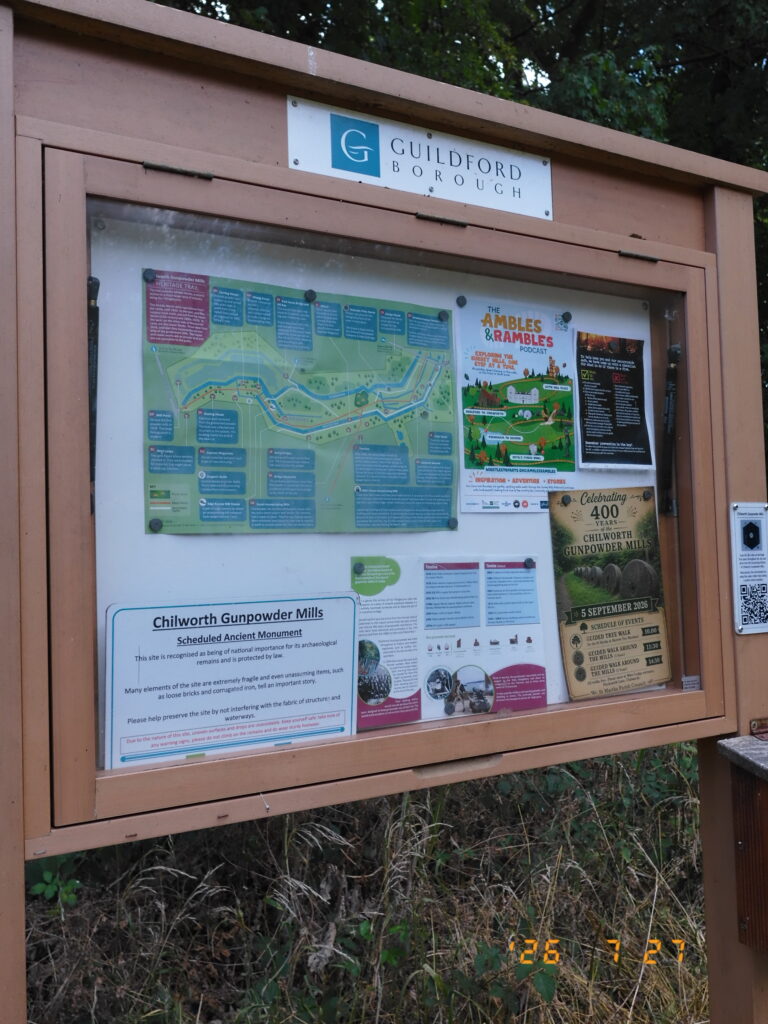
Chilworth Gunpowder Mills.
We had been trying to find this place for weeks. Every time we set off, Google seemed determined to send us somewhere completely different. Little country lanes, dead ends and roads that certainly did not lead to the mills.
This time, however, we found them.
As soon as we stepped through the old brick archway, it felt as though we’d wandered into another world. It reminded me of Narnia, a secret entrance hidden beneath a canopy of green. The noise of the road disappeared almost instantly and was replaced by birdsong, rustling leaves and the gentle sound of running water.
It was one of those places where you instinctively lower your voice.
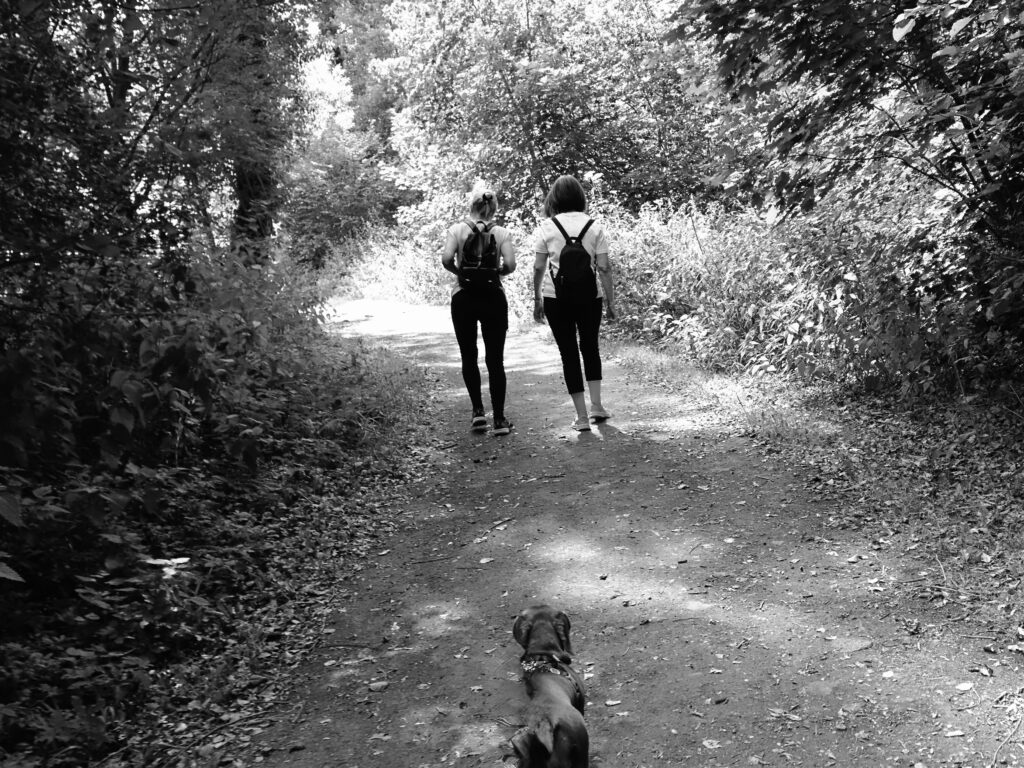
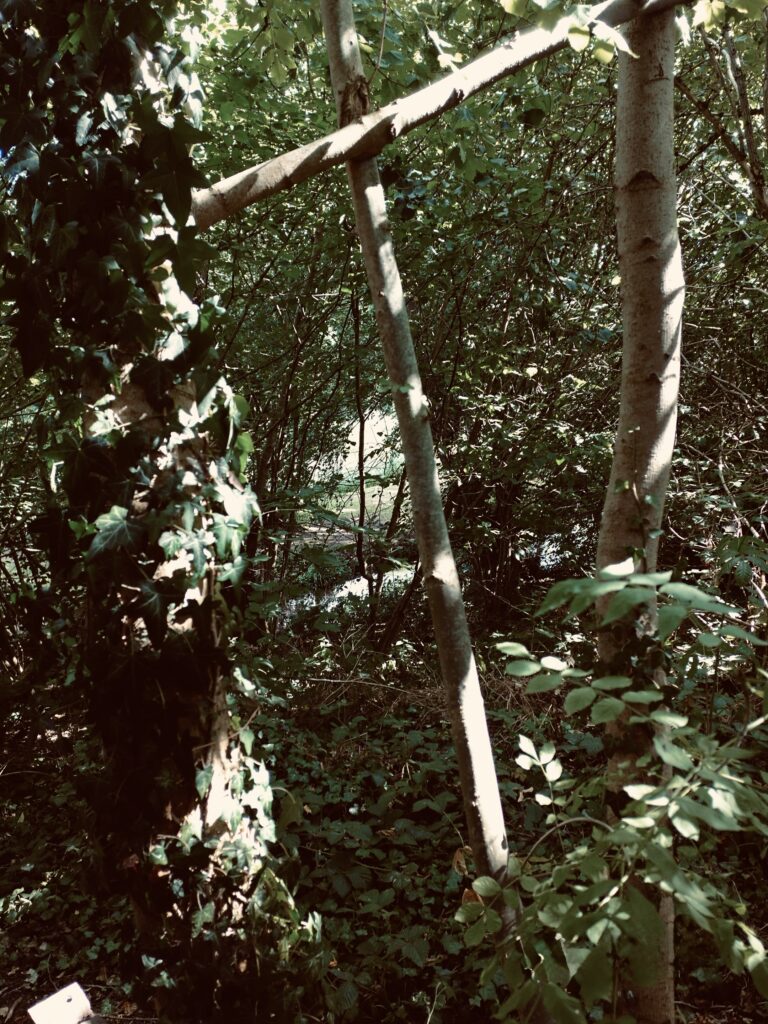
Grace trotted ahead with her ball proudly clamped in her mouth while I found myself looking upwards more than forwards. The trees were enormous. Their roots twisted across the woodland floor like ancient fingers, their trunks covered in moss and ivy that had probably been growing there for decades.
Perhaps centuries.
The funny thing is, I realised how little I actually know about birds. There were songs echoing through the woods that I couldn’t identify. When I was younger, I never really spent enough time in places like this to notice them.
Now, at fifty two, I find myself wanting to learn.
It really is never too late.
The ruins slowly began to appear through the trees.
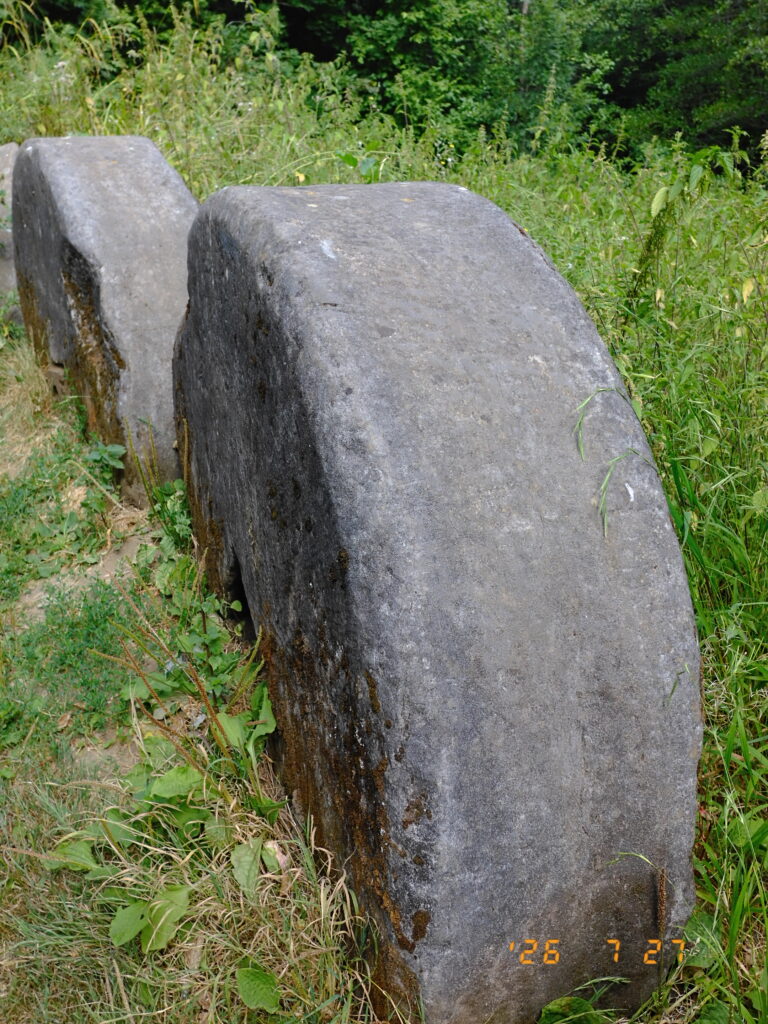
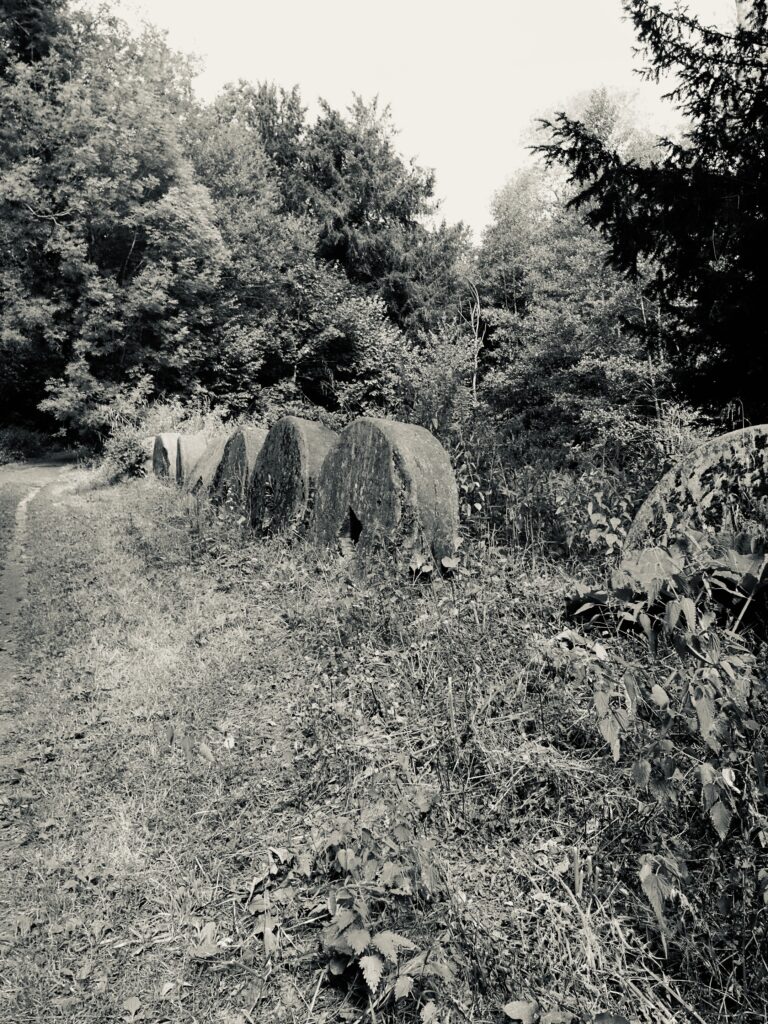
At first they look like old stone buildings quietly disappearing back into the woodland, but every wall has a purpose. Every brick tells a story.
The Chilworth Gunpowder Mills were established in 1626 by the East India Company and, for almost three hundred years, this peaceful valley became one of the most important places in Britain for making gunpowder. During the seventeenth century, Chilworth was even the country’s only authorised producer of gunpowder for the Crown.
It seems almost impossible to believe.
Standing there today, listening to birds and watching dragonflies skim across the water, it is difficult to imagine this valley once supplying gunpowder for wars, mining and engineering across Britain and beyond.
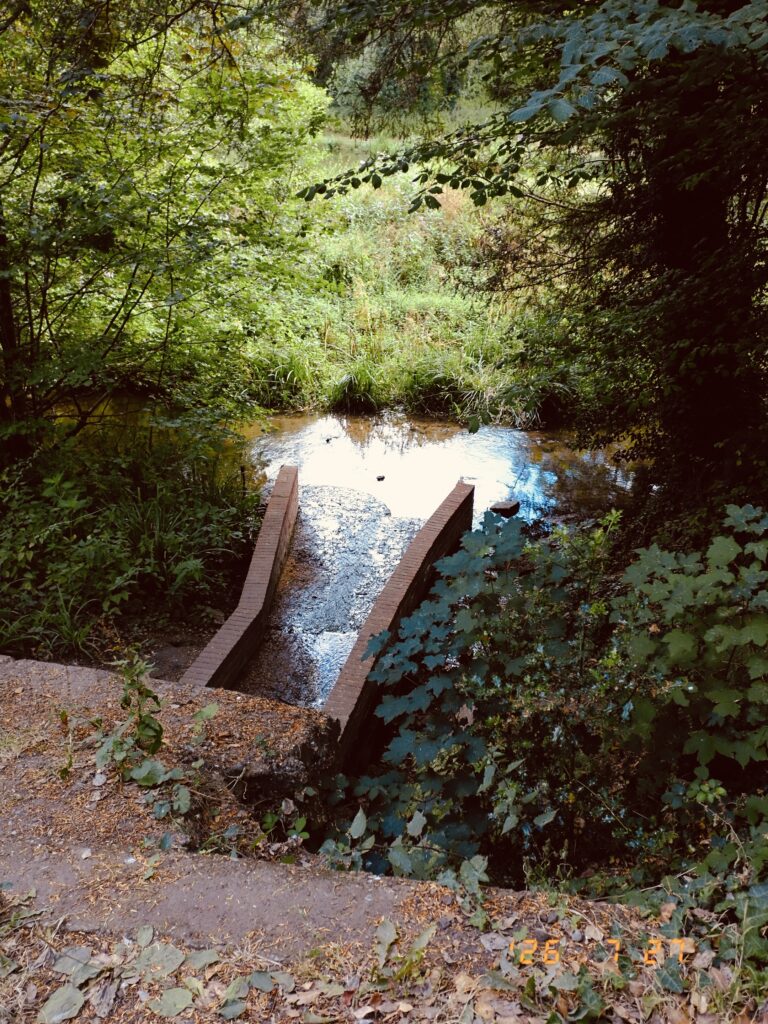
The River Tillingbourne was the heartbeat of the mills. Its fast flowing water powered enormous water wheels which drove the machinery used to crush and blend charcoal, sulphur and saltpetre, the three ingredients needed to make black gunpowder.
The buildings themselves were spread out along the valley rather than built together. It was a clever piece of engineering. If one mill exploded, there was a chance the others might survive.
Sadly, accidents still happened.
The work was dangerous and explosions claimed lives over the centuries. One of the worst came in 1901 when six men were killed. Production eventually came to an end in 1920 after the First World War, and nature slowly reclaimed the valley.
Today, moss softens the old brickwork, trees grow where workers once hurried between buildings and the same water still flows gently through the site.
There is something strangely beautiful about that.
I found myself asking the same question over and over.
Why do we spend so much of our history creating things to destroy one another?
Standing in such a peaceful place, surrounded by beauty, it seems impossible to understand.
Perhaps nature always has the final word.
Of course, Grace was far less interested in philosophy.
She had spotted a stream.
Still carrying her ball, she wandered towards the bank. The next thing I knew, the ball slipped from her mouth and bounced down the steep slope.
Without thinking, she launched herself after it.
Without thinking, I launched myself after her.
There was a brief moment where I was somewhere between running, sliding and nearly ending up arse over tit. Somehow I stayed upright, although I suspect it wasn’t particularly graceful.
I laughed all the way down.
At sixteen you bounce.
At fifty two you negotiate with your knees first.
Eventually, with ball safely recovered and dignity mostly intact, we wandered back towards the village.
Our next stop was The Percy Arms.
What a lovely little pub.
It has plenty of outdoor seating beneath the trees and immediately felt welcoming. They are well known for their South African steaks, although my attention was firmly fixed on the coffee.
The cortado cost just £2.95.
That genuinely surprised me. After visiting cafés across Surrey where coffee often costs between £3.50 and £4, it felt like discovering a little hidden treasure.
Good coffee.
Lovely surroundings.
Kind people.
Grace stretched out happily in the shade while a member of staff brought over a large bowl of fresh cold water without us even asking. Little gestures like that tell you everything about a place.
Then Grace met Harry.
The two dogs greeted each other as though they had known one another for years while Harry’s owner chatted with me about the village. She laughed and mentioned that plenty of the older locals gather at The Percy Arms for a chat.
I smiled.
I am only seven years away from sixty.
Perhaps one day that will be me.
To be honest, I rather hope it is.
There is something comforting about people sitting together simply to talk. No rushing. No scrolling. No agenda. Just conversation.
Sometimes I wonder whether we are losing that.
Maybe places like Chilworth quietly remind us not to.
One of the things I love about this corner of Surrey is that every road leads somewhere worth exploring. Just a few minutes away are Silent Pool, the beautiful village of Shere, Farley Heath, Albury and countless woodland paths that seem to disappear into history.
If you love walking, photography, local history or simply finding places that make you slow down for a while, I cannot recommend Chilworth highly enough.
I came looking for an old gunpowder mill.
Instead, I found birds whose names I still do not know, woodland that has witnessed four centuries of history, a wonderfully welcoming pub, one of the best value cortados I have had in Surrey and a dog called Harry.
As Grace slept on the journey home, muddy paws and all, I found myself thinking about the valley one last time.
Four hundred years ago it echoed with industry, danger and the making of gunpowder.
Today it echoes with birdsong, children’s laughter, dogs splashing in the stream and walkers pausing to admire the trees.
Perhaps nature always finds a way of healing.
Perhaps that is why I keep coming back to places like this.
Not because they are perfect, but because they remind us that even after the darkest chapters, life quietly begins again.
Maybe that is the real story of Chilworth.
Sarah and Grace 🌹
Until next time,
A story that captured my mind of beautiful countryside walks and history to be told and you have told it beautifully and meeting lovely people along the way and loving how you and Grace are loving life anf having fun ….